SCIENCE · 2026-08-15
Rice Science: Starch, Clump, and Shelf Life
By Bokki Curator
Amylose, retrogradation, and why medium-grain Korean rice behaves differently from jasmine when fried.
TL;DR
Amylose, retrogradation, and why medium-grain Korean rice behaves differently from jasmine when fried.
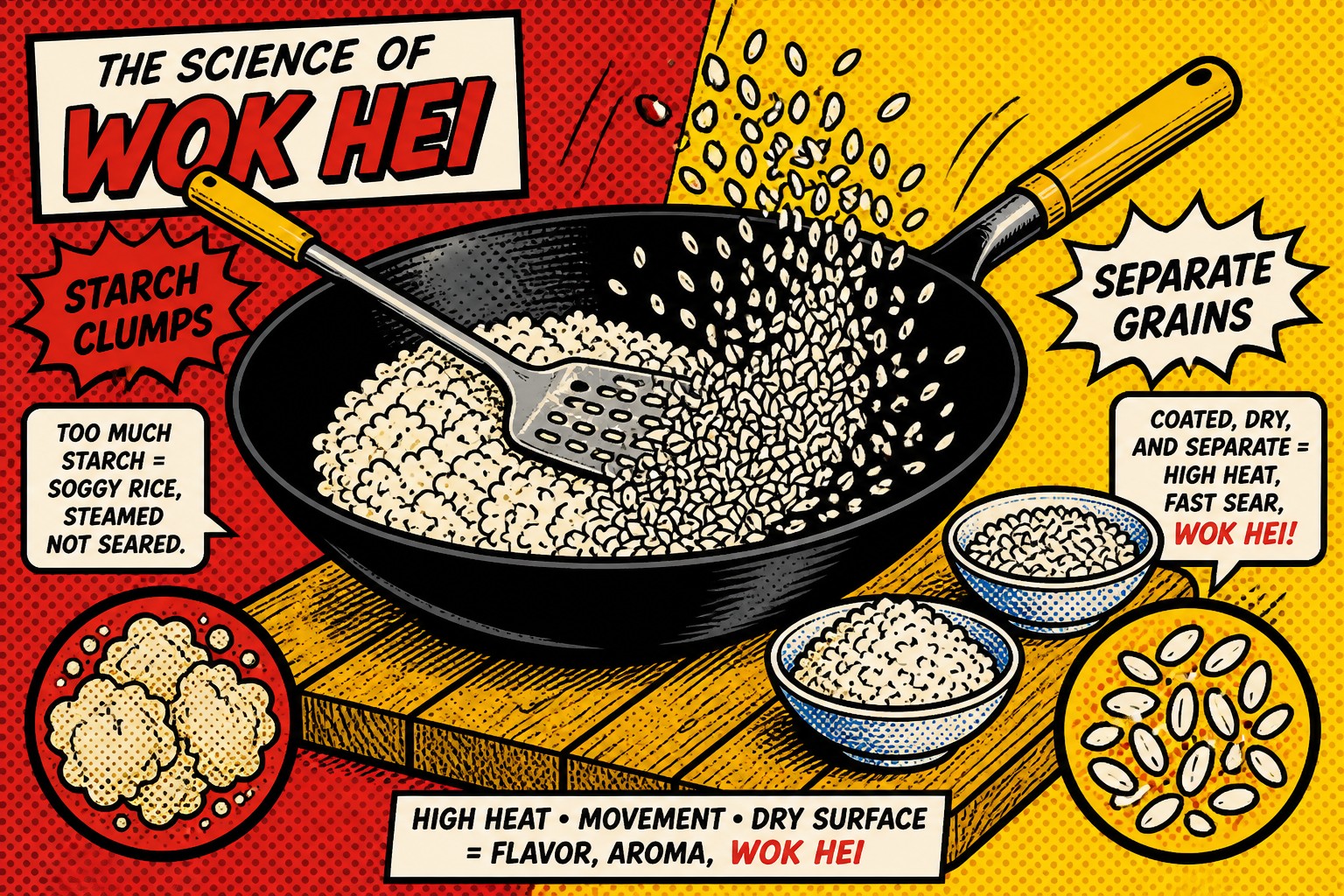
Short-grain Korean rice is higher in amylopectin than long-grain jasmine, so it clumps more when hot and needs chilling to firm. That clump is desirable for bibimbap but the enemy of bokkeumbap — another reason day-old rice is doctrine.
Retrogradation firms chilled rice as starch crystallizes; that crystallinity is what lets hot oil separate grains instead of mashing them. Reheating without oil barely softens it; hot oil with tossing rapidly re-gelatinizes just the surface, yielding separate yet tender grains.
Leaving rice uncovered in the fridge dehydrates the surface slightly, which helps grain separation at the wok. Covering traps condensation and re-wets the exterior; if you must cover, vent with a towel inside the container to absorb moisture.
Salt timing matters: salt rice water normally, but salt fried rice late. Salting raw grains draws out moisture via osmosis and encourages sticking; salting at the toss seasons without tightening. This is why wok masters add soy at the end, not at the soak.
For fresh-rice emergencies, cook with 10% less water (1:1.1 rice:water instead of 1:1.2), spread on a wide tray, and blast with a fan 20 minutes. You simulate 6 hours of retrogradation well enough to rescue dinner without planning a day ahead.
Across the Kimchee Network
More from the Kimchee Network