CULTURE · 2026-08-10
Rabokki Logic: When Bokki Meets Noodles
By Bokki Curator
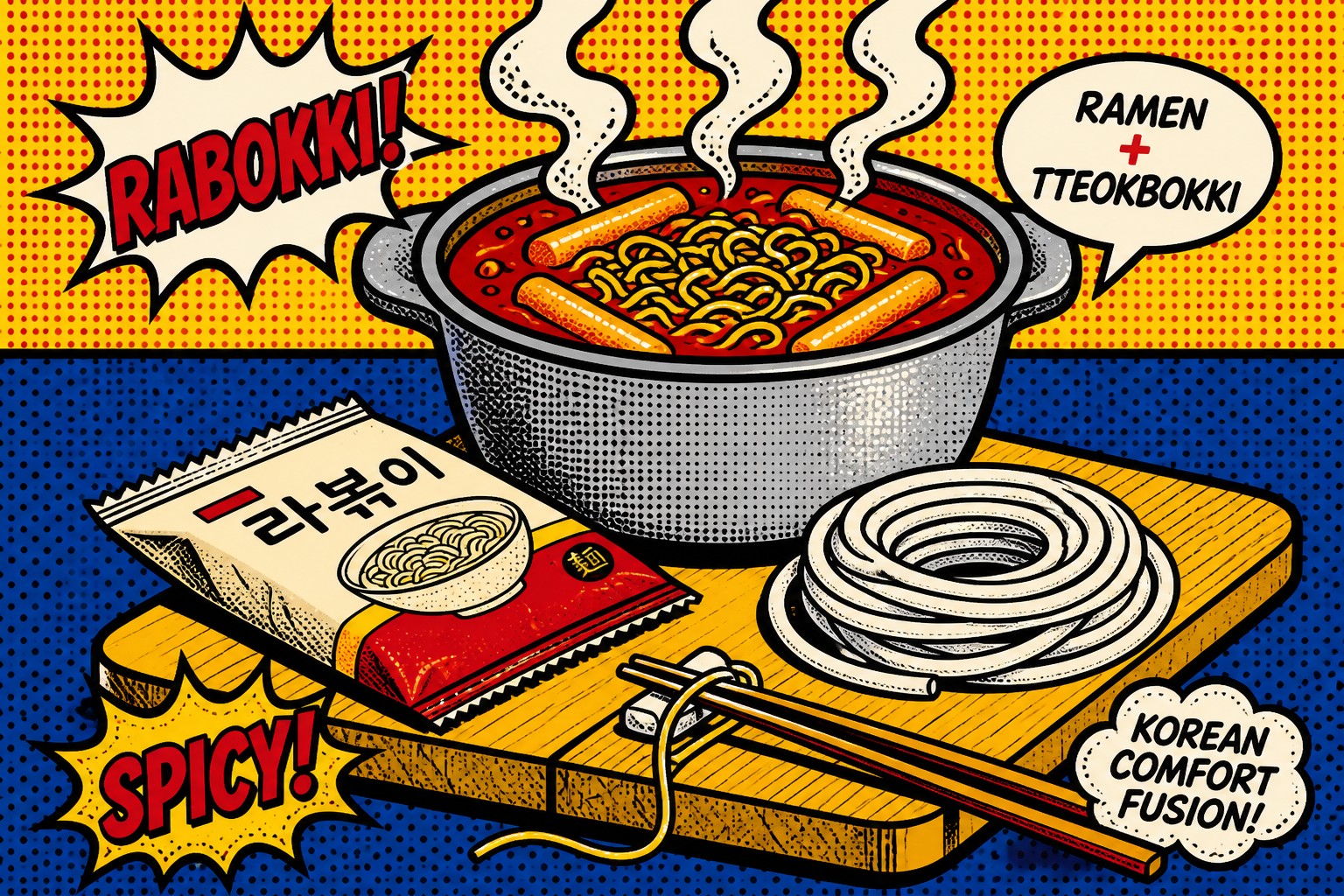
Bokki is not just rice — rabokki (ramen + tteokbokki) and eomuk-bokki show the family thinking behind stir-fry naming.
TL;DR
Bokki is not just rice — rabokki (ramen + tteokbokki) and eomuk-bokki show the family thinking behind stir-fry naming.
Bokki as a suffix means stir-fried / braised, not just fried rice; tteok-bokki, rabokki, jeyuk-bokkeum, eomuk-bokki share that philosophy. Rabokki fuses tteok sauce with ramyun timing: braise tteok 80% before adding noodles, then 3 minutes together.
Eomuk-bokki (stir-fried fish cake) is the weeknight anchor many Korean moms make twice weekly. Slice fish cake sheets, stir-fry with onion, carrot, soy, sugar, and gochujang, and you have banchan for lunch boxes that reheats well — softer than fresh fry, but intended that way.
Jeyuk-bokkeum and eomuk-bokki often share a table as meat-and-fish-cake counterpoints. Cook meat fast and hot, fish cake mellow and glazed; one salty-savory, one sweet-spicy — the pair covers the bokkeum spectrum without repeating texture.
Noodle bokki crossovers extend to jjajang-bokki and curry-bokki where jjajang paste or curry powder replaces gochujang. The rice cake shape stays, the sauce carries the new identity — a reminder that bokki is a method, not a recipe.
Understanding the suffix frees your pantry: any sauced stir where liquid reduces to a glaze and coats a starch could be called bokki at home — use the term playfully and match sauce to starch moisture.
Across the Kimchee Network
More from the Kimchee Network