RECIPES · 2026-08-09
Kimchi vs. Spam Bokkeumbap: Two Classics, One Technique
By Bokki Curator
The two most-ordered Korean fried rices share heat control but split on seasoning logic.
TL;DR
The two most-ordered Korean fried rices share heat control but split on seasoning logic.
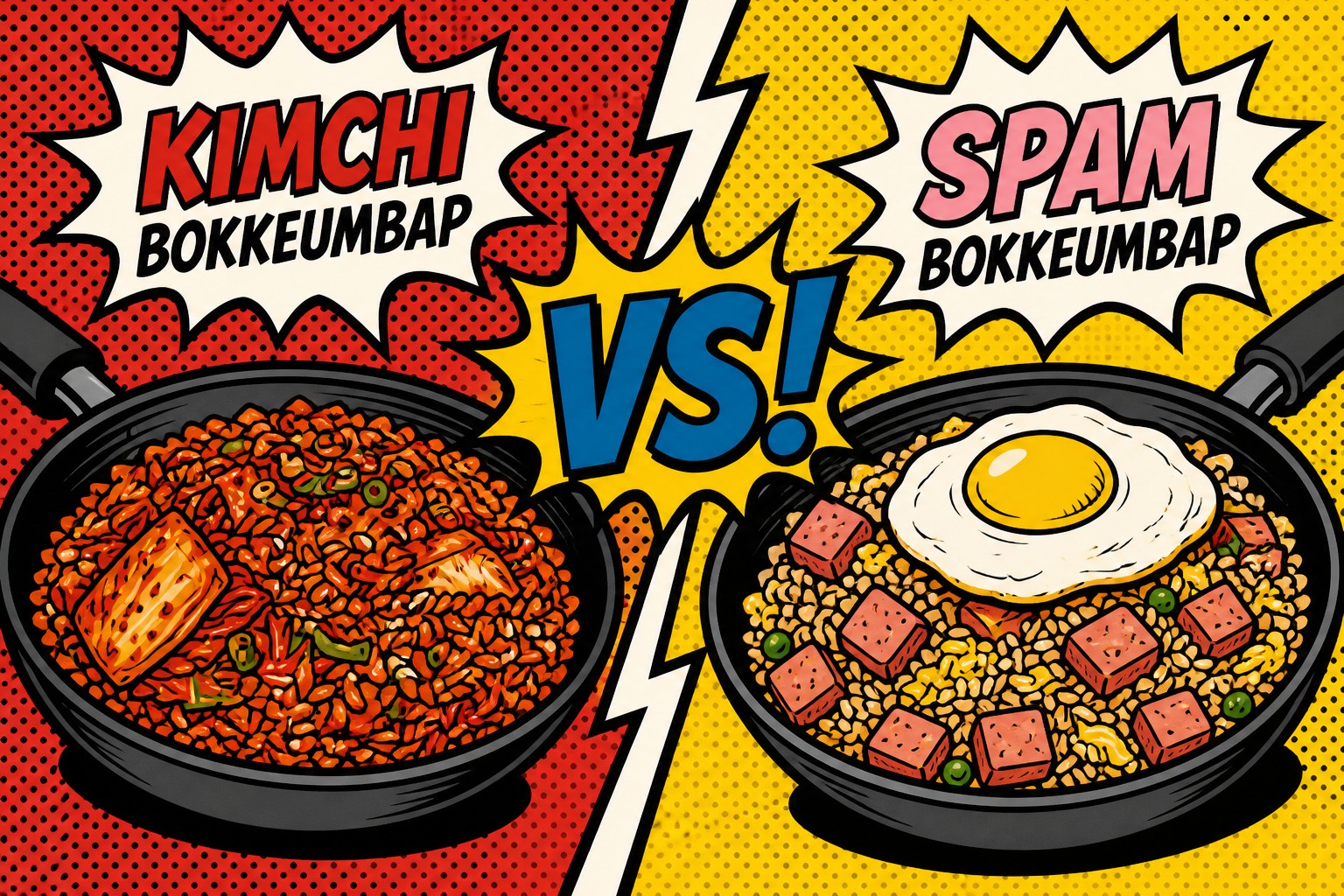
Kimchi bokkeumbap is sour-savory and needs its juice. Chop 1 cup well-ripened kimchi, squeeze lightly, reserve 2 Tbsp juice, and add juice plus 1 tsp gochujang to the wok after rice; the acid cuts pork fat that usually accompanies it like belly or spam.
Spam bokkeumbap is salt-first. Dice spam 1 cm, render until edges brown, and use the rendered fat as half your cooking oil; cut soy to 1 tsp per 2 cups rice because spam carries salt, and add extra scallion and pepper to lift the richness.
Both want egg handled the same: soft scramble folded in late so ribbons coat grains, plus optional sunny-side on top for a saucy finish where yolk acts as extra emulsifier for each bite.
Common mistake is doubling kimchi and spam together without reducing salt. If you combine them — a legitimate craving — skip soy entirely and let kimchi juice and spam render do the salting, tasting before any extra.
Finish both with gim dust and sesame. The seaweed adds iodine and crunch that makes a pan of fried rice feel composed rather than thrown together.
Across the Kimchee Network
More from the Kimchee Network