GUIDE · 2026-08-11
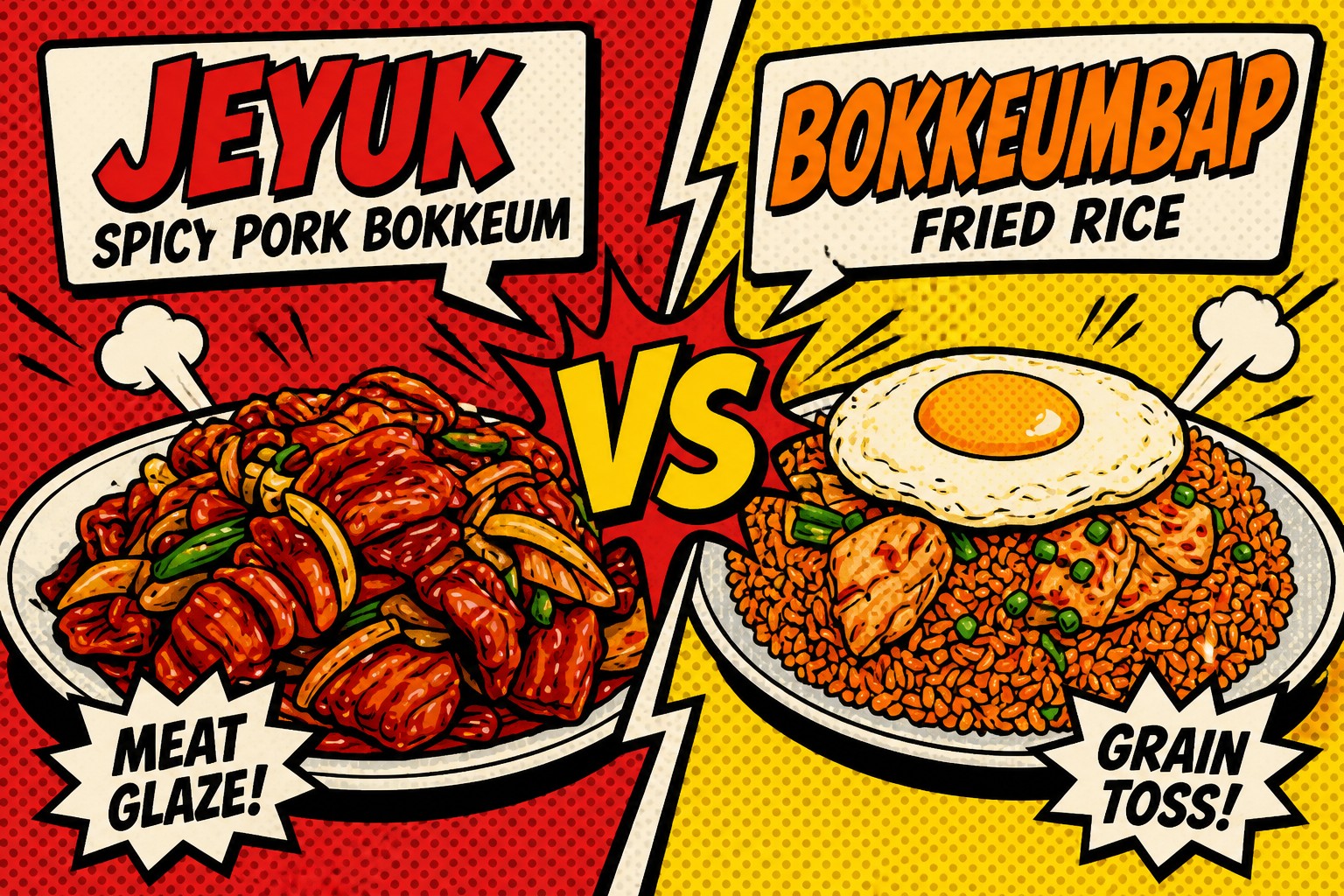
Jeyuk-Bokkeum vs. Bokkeumbap: Meat-Glaze vs. Grain-Toss
By Bokki Curator
Same verb, different dinner — how jeyuk (pork) bokkeum concentrates sauce while bokkeumbap disperses it.
TL;DR
Same verb, different dinner — how jeyuk (pork) bokkeum concentrates sauce while bokkeumbap disperses it.
Jeyuk-bokkeum braises thin pork shoulder in a concentrated gochujang-soy glaze until the pan is nearly dry and meat edges caramelize; bokkeumbap tosses rice through a seasoned oil so each grain is separate. One is saucy-clingy, the other is dry-separate — choose per hunger.
Pork selection matters for jeyuk: shoulder or butt sliced 3 mm with some fat, not lean loin which dries on high heat. Marinate 20 minutes in gochujang, doenjang, pear, and garlic, then sear without sauce first to brown before adding marinade as glaze.
Bokkeumbap rice must be cold; jeyuk meat must be room-temp. That inversion explains why they pair so well together in a dosirak — warm, glazed pork over cool-tossed rice where meat juices re-season grains without steaming them further.
Leftovers diverge: jeyuk-bokkeum reheats in a hot pan with a splash of water to re-glaze; bokkeumbap reheats best as fried rice again, briefly. Swapping methods dulls both — do not steam jeyuk under a lid to reheat like rice.
If you only stock one pantry for both, make a master gochujang glaze (gochujang, gochugaru, soy, rice syrup, garlic) and use 3 Tbsp for jeyuk per 500g pork, 1 Tbsp for bokkeumbap per 2 cups rice — same jar, two dilutions.
Across the Kimchee Network
More from the Kimchee Network