CULTURE · 2026-08-14
Bokki vs. Bokkeum: The Naming Guide Koreans Use
By Bokki Curator
Why menu romanization splits one verb — bokki, bokkeum, bokum — and what to order when you see each.
TL;DR
Why menu romanization splits one verb — bokki, bokkeum, bokum — and what to order when you see each.
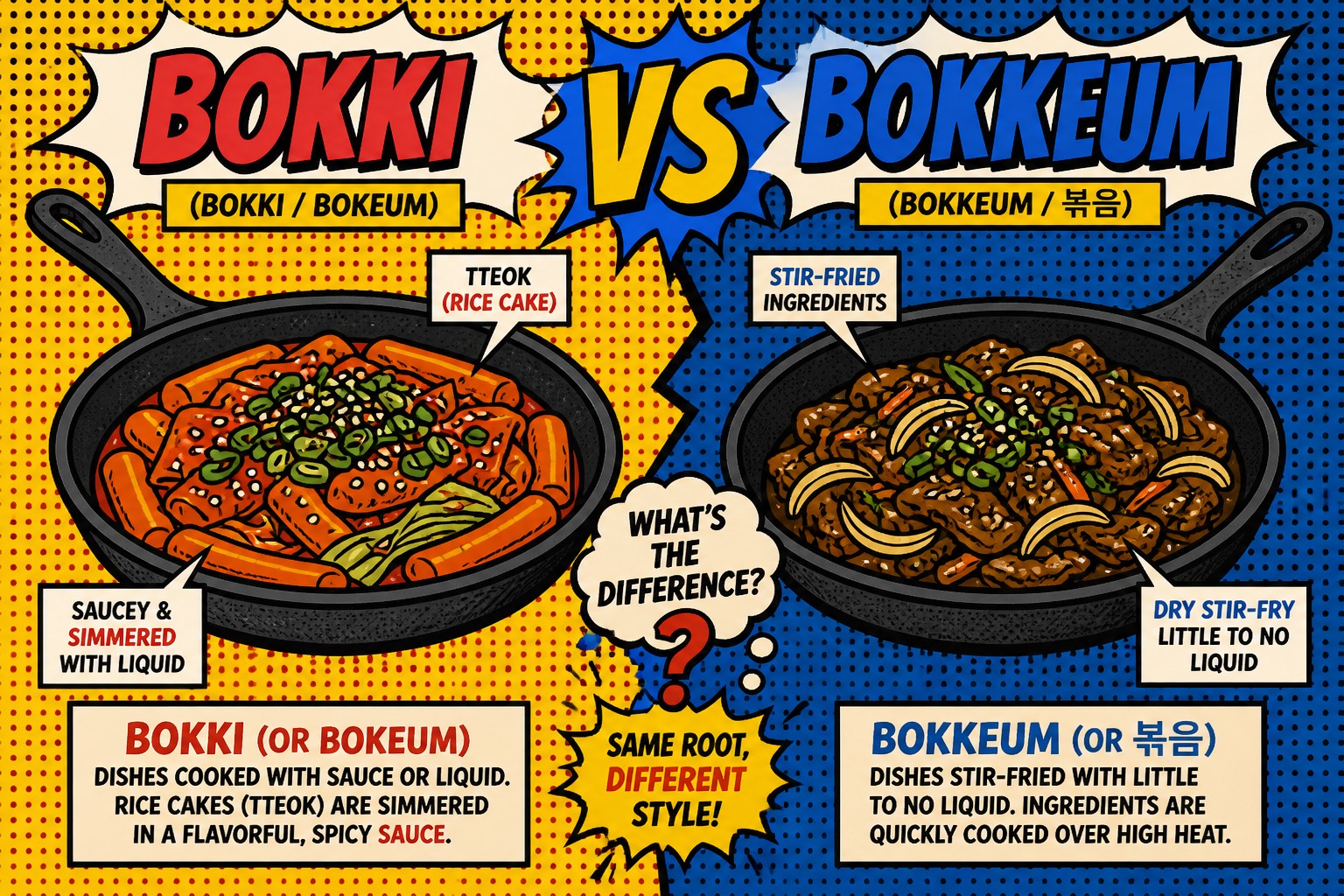
Bokkeum and bokki are the same verb (볶다) conjugated differently: bokkeum is the noun 'stir-fry,' bokki is a familiar compound suffix in food names like tteok-bokki and jeyuk-bokkeum. English menus split them for readability, not because they are different techniques.
Romanization chaos adds bokum, bokkim, bokkum — all the same sound. Search all spellings when hunting recipes: 'jeyuk bokum' and 'jeyuk bokkeum' point to the same pork stir-fry even if SEO treats them separately; our network maps them together.
Bokkeum tends to imply a sidedish or meat plate (jeyuk bokkeum, eomuk bokkeum, nakji bokkeum) while bokki signals a hybrid or sauced stir where the starch is named first (tteok-bokki, ramen-bokki). Knowing that, 'bokki.ai is fried rice' becomes understandable — it is bokkeumbap logic under the bokki naming family.
bokkeum.com and bokki.ai intentionally diverge for SEO: bokkeum.com owns the meat-and-fish-cake stir vocabulary (jeyuk, eomuk, ojingeo), bokki.ai owns rice-noodle-tteok hybrid stir-fry thinking. One pantry, two search intents.
For users, the rule is simple: craving meat with rice? Search bokkeum. Craving starch tossed in sauce? Search bokki. We built both sites to answer both without competing for the same query.
Across the Kimchee Network
More from the Kimchee Network